There’s a conversation I keep having in private that almost never happens in public. It usually starts the same way: two founders, no audience, no cameras. And within minutes, the real story comes out — the moment the bank account hit zero, the co-founder conflict that nearly ended everything, the launch that failed so badly they considered shutting down the next morning.
Every time, I think the same thing: why did it take a private room for this to come out?
The highlight-reel problem
We live in an era of curated success. LinkedIn is full of funding announcements, revenue milestones and “lessons learned” posts that somehow always end with the founder coming out stronger, wiser and more successful than before. I’m not saying those stories are false. But they’re incomplete.
What’s missing is the part before the lesson. The part where you didn’t know if there was going to be a lesson at all. When I was building NanoTemper, there were phases where I had no idea if we’d survive the next week. Phases where I questioned everything — the product, the team, myself. I didn’t post about those moments. Almost no founder does.
Why founders don’t talk about the hard parts
I understand why. I’ve felt it myself.
- Vulnerability feels like weakness. You’re supposed to be the one with the vision, the energy, the answers. Admitting doubt feels like it undermines everything.
- The market is always watching. Competitors, potential hires, future investors — one honest post about a rough quarter can follow you for years.
- The success story is simply easier to tell. It has a clean arc. The messy middle doesn’t fit neatly into a LinkedIn post or a keynote slide.
So we wait until it’s over. Until we can frame it as a lesson. Until the ending is known.
What that silence costs
Here’s the problem: the next generation of founders is learning from a version of reality that never existed. They read the success stories, see the funding rounds and growth curves — and when their own journey is messy and uncertain and terrifying, they assume something is wrong with them.
I’ve met too many first-time founders who almost quit — not because their idea was bad, but because they thought the difficulty meant they weren’t cut out for it. They didn’t know that the difficulty is the job. That everyone is figuring it out as they go. That the 3 a.m. doubt is not a sign of weakness — it’s a sign that you care.
What actually helps
What saved me in those hard moments wasn’t a book or a framework. It was conversations. With founders a few years ahead of me. Who had been through something similar and came out the other side. Who didn’t tell me what I wanted to hear — but what I needed to hear.
Those conversations changed everything. Not because they had all the answers, but because they made me feel less alone — and gave me something no polished success story ever could: the real picture of what building a company actually looks like.
The honorable entrepreneur’s approach
I believe the most valuable thing an experienced founder can do is be honest about the journey. Not performatively vulnerable. Not trauma-dumping for engagement. But genuinely, usefully honest about what it took — the decisions that kept you up at night, the things you’d do differently, the moments you almost quit and why you didn’t.
That honesty is a form of giving back. It’s how we build a startup culture that’s actually sustainable — one where the next generation doesn’t have to learn everything the hard way, alone. Revenue makes you visible. Profit makes you powerful. But staying true to yourself, and being honest about what that requires, makes you unstoppable.
What happens when you actually have that conversation
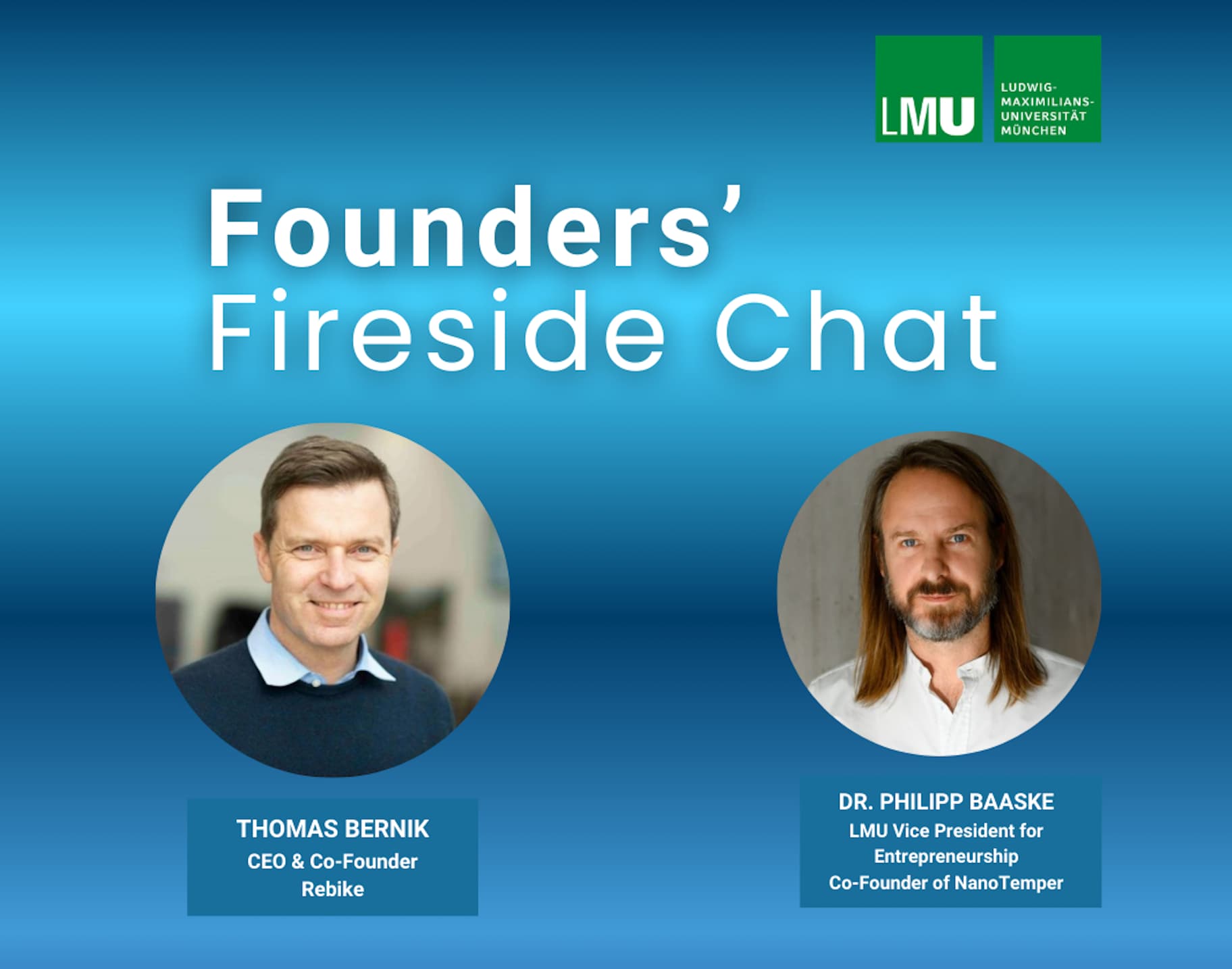
A few days ago, I put this into practice. 45 people in a room at the LMU Innovation & Entrepreneurship Center. No slides, no keynotes — just me, Thomas Bernik (serial entrepreneur and CEO of Rebike) and Natascha, talking for over three hours about what building a company really looks like.
The moment that stuck with me most was when someone asked: how do you convince a co-founder to join when you have nothing to offer but an idea? The answer wasn’t about pitch decks or equity splits. It was about trust, shared mindset, and the willingness to figure it out together.
The question I keep coming back to
If you had an experienced founder to yourself for an hour — no agenda, no pitch, no performance — what would you ask them? I’d bet it wouldn’t be about their growth strategy or their cap-table structure.
How did you keep going when you didn’t know if it was going to work? That’s the question worth answering. Out loud. In public. For the founders who need to hear it right now.