Every major VC in Germany said no
In 2008, my co-founder and I had a prototype, a borrowed lab, and a belief. We pitched every major venture-capital firm in Germany. The answer was always the same: “Too risky.” “Too early.” “Too niche.”
One VC told us: “Come back when you’ve sold one product.” We did. We sold one. “That was luck. Come back after 10.” We sold 10. By then, we stopped coming back.
Today, NanoTemper is a global business: €56M in revenue, 10,000+ users, 250+ employees. 100% founder-owned. Built entirely from profits. No VC. No exit pressure. No external board telling us what to do.
The myth: “you can’t scale without VC”
There’s a dominant narrative in the startup world: raise money → grow fast → exit big. It’s the Silicon Valley playbook, and it works — for some companies, in some markets, at some stages. But somewhere along the way it became the only playbook, as if bootstrapping wasn’t even a real choice.
The truth is: profitability is a business model. Revenue from customers is the most sustainable funding source there is. You don’t need investors to validate your idea. You need customers.
What bootstrapping actually looked like
I won’t romanticize it. Bootstrapping was brutal. We slept in cars. Drove through the night from Munich to Berlin to Basel. Did production, sales and product development ourselves — just the two of us. We worked in borrowed lab space, sometimes without proper lighting, because we couldn’t afford it.
There were moments of doubt, where a VC check would have made everything easier. But every “no” from investors forced us to find a “yes” from customers. Every rejection made us sharper. When you’re funded by customers, you build what they need — not what investors want to see.
Bootstrapping vs. VC: an honest comparison
Let me be clear: I’m not anti-VC. Venture capital is essential for certain companies — deep tech, biotech, hardware at scale, anything that needs massive upfront investment before revenue is possible. But it’s not the only path. Here’s how I think about it:
| Bootstrapping | VC-funded | |
|---|---|---|
| Speed | Slower, sustainable | Fast, sometimes forced |
| Control | 100% founder-owned | Shared with investors / board |
| Pressure | Customer pressure | Exit pressure |
| Risk | Personal financial risk | Dilution, loss of control |
| Flexibility | Pivot anytime | Needs board approval |
| Upside | Keep everything | Share the exit |
Neither is better. But you should choose consciously — not default to VC because “that’s what startups do.”
5 things we did differently
1. We sold before we scaled.
Our first priority was always: find one customer who pays. Then another. Revenue validates faster than any pitch deck.
2. We stayed lean — painfully lean.
No fancy office. No big team. For years it was just two founders doing everything. We only hired when revenue allowed it.
3. We ignored “go big or go home.”
We didn’t try to dominate the market in year one. We found a niche, owned it, then expanded. Slow and steady.
4. We reinvested everything.
Every euro of profit went back into the company. No founder salaries for years. It was painful, but it compounded.
5. We said no to VCs — even when they came back.
After we proved the model, some VCs returned. By then we didn’t need them. We had something better: independence.
The moment I knew it was worth it
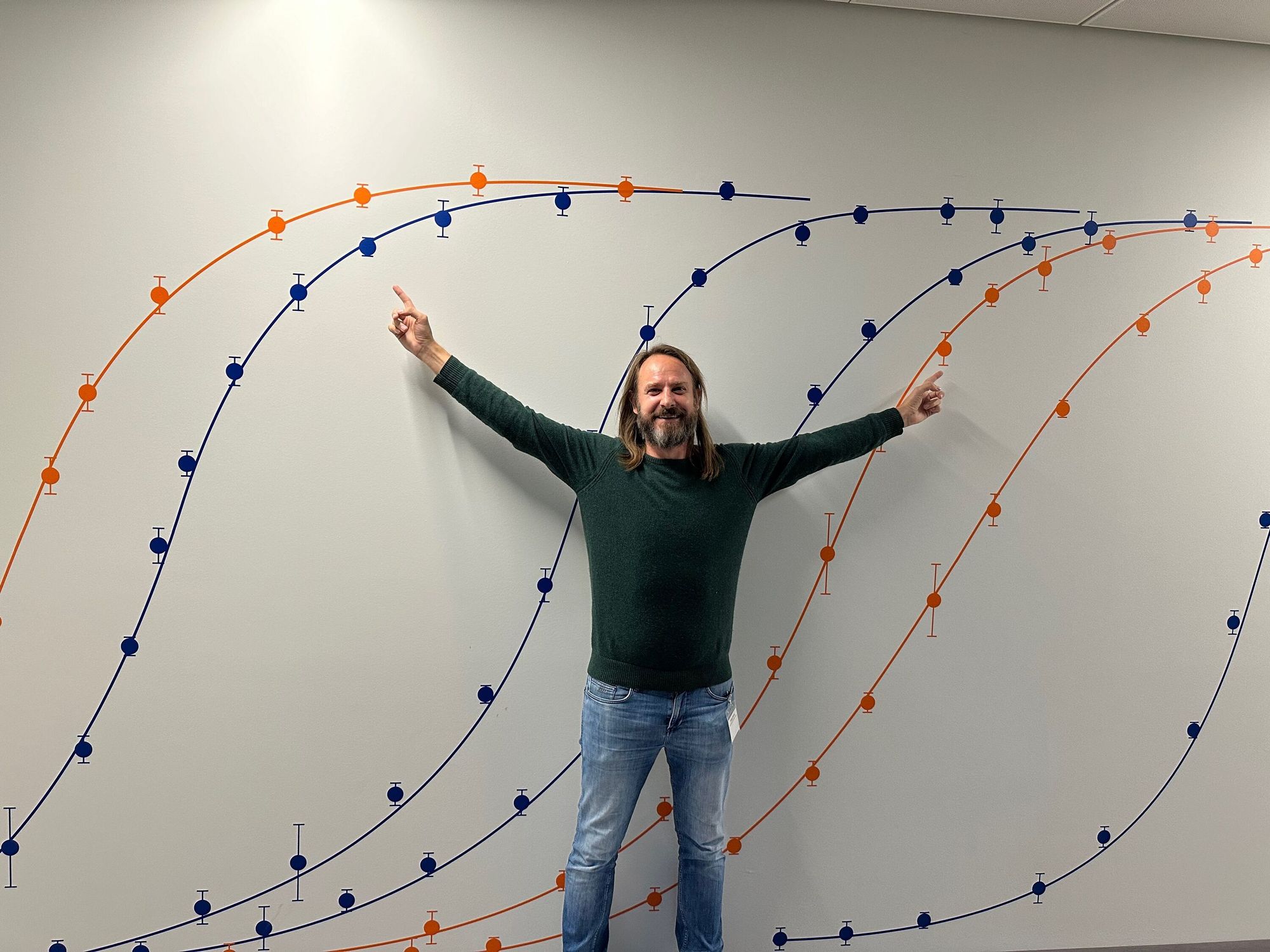
Recently, I saw something that stopped me. A customer had taken our measurement curves — actual data from our instruments — and painted them on their office wall. Not as decoration. As culture.
In 2008, people said measuring molecular interactions this way was impossible. Too niche. Too crazy. Now it’s art on someone’s wall. That’s when I knew: we didn’t just build a product. We built something that matters — not because someone funded it, but because people use it, love it, put it on their walls.
The bottom line
If you’re building something and the world keeps saying no: don’t quit. Sell one product. Then another. Earn your money from your customers. Grow from your revenue. That’s what we did. And we’d do it again.
VC is a tool. Bootstrapping is a tool. Choose the one that fits your vision — not someone else’s playbook.